
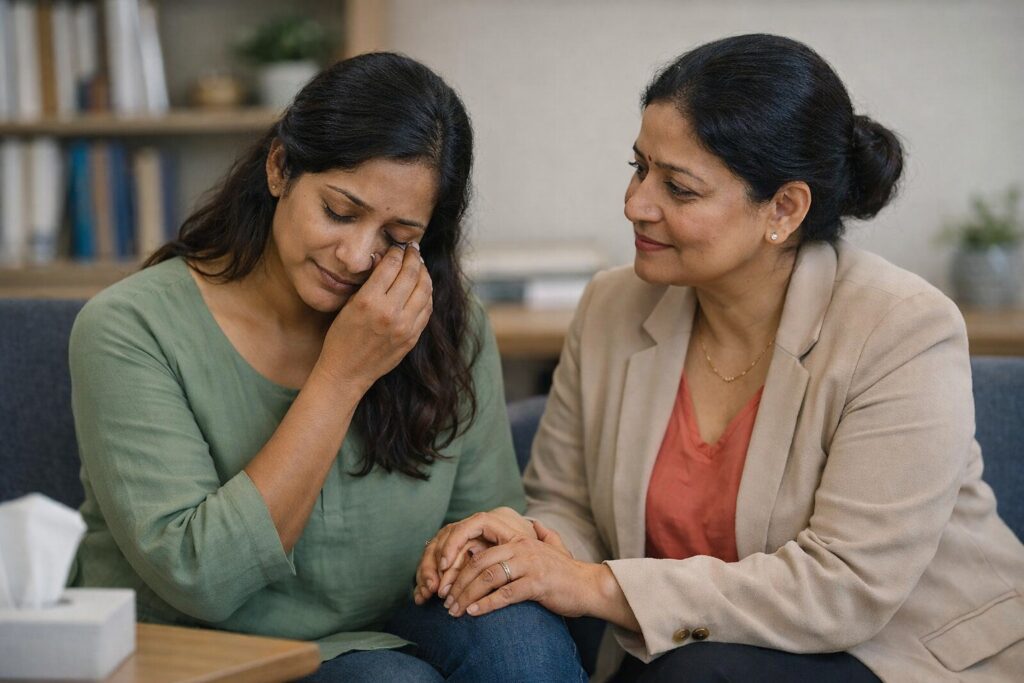
Grief rarely arrives the way we expect it.
Most of us imagine it as recognisable sadness—tears, longing, a quiet emptiness. But grief is far more complex than that. It can show up as exhaustion that never lifts, a fog that blurs everyday tasks, or emotional waves that sweep in without warning. Sometimes it arrives quietly, as numbness, leaving us wondering what we should be feeling at all. This is why meaningful grief support must acknowledge forms of grief that are not always visible or easily named.
Grief isn’t only emotional; it affects the brain, the nervous system, and the way we experience the world. It reshapes memory, attention, and even our sense of reality. Each time we register the absence of someone we love, the brain must relearn what life looks like without them. Effective grief support recognises these neurological and psychological shifts, rather than treating grief as a purely emotional phase.
No two people experience grief the same way.
You may like:
- Healing After Loss: Renowned Grief Therapist on Overcoming Grief and Finding Purpose
- From Loneliness to Belonging: How Aamra Seniors Club is Redefining Senior Life in India
- Mamta Wasan: Reclaiming Life After Loss – Healing, Purpose, and Second Chances
Quick Summary
Grief is complex, deeply personal, and often misunderstood. This piece explores why loss affects everyone differently, the limitations of well-meaning support from family and friends, and the importance of safe, empathetic spaces for healing. It highlights The Grief Circle as a compassionate community offering structured grief support through shared experiences, professional guidance, and gentle accompaniment.
Why Grief Affects Everyone Differently
Some people cry openly. Others keep functioning on the outside while unravelling within. Some want to speak repeatedly about what they’ve lost; others struggle to find words at all. Personalised grief support honours these differences instead of imposing expectations of how grief “should” look.
Grief doesn’t move in a straight line. It ebbs and returns, often resurfacing during milestones, festivals, anniversaries, or moments of stillness. What looks like “coping” to the world may simply be survival.
There is no universal timeline for grief.
No fixed sequence.
No moment when one is expected to be done.
Yet many people feel pressured to behave as though there is.
Sustained grief support understands that grief revisits us over time, rather than ending neatly after a few months.
The Misconceptions That Surround Grief
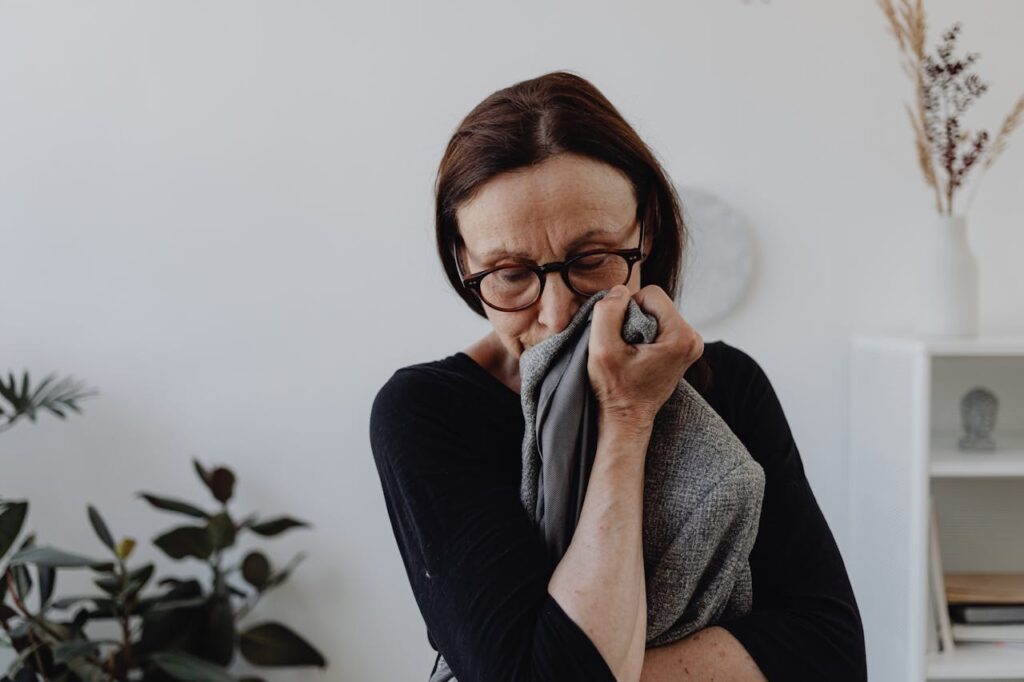
One of the most painful aspects of grief is how misunderstood it remains. In many societies, grief is still treated as a social taboo -something awkward, uncomfortable, and best kept private. The absence of open conversations around loss often leaves people without access to compassionate grief support.
People often avoid those who are grieving, unsure of what to say. Others try to help by encouraging positivity or urging the grieving person to “move on,” not out of unkindness, but because loss and mortality make them personally uncomfortable.
Well-meaning phrases like “Time heals everything” or “You must stay strong” are offered as reassurance, but they can unintentionally rush grief and silence deeper pain.
Grief is not passive. It does not resolve itself simply because time passes. Healing requires acknowledgement – of the loss, of the love, and of the emotions that continue long after the world expects closure.
Grief doesn’t need fixing. It needs space.
True grief support creates room for this acknowledgement, without trying to hurry the process. Perhaps learning how to sit with grief -our own and others’- should be considered a life skill, introduced early through education, rather than something we stumble through alone as adults.
When Family and Friends Can’t Fully Support – Despite Caring
Most family members and friends genuinely want to help. They show up with concern and care. But grief often leaves them unsure and uneasy. Afraid of saying the wrong thing, they change the subject. Others try to reassure, believing encouragement will ease the pain. In these moments, structured grief support can offer what personal relationships sometimes cannot.
Over time, conversations grow shorter. Emotions are softened or redirected. Silence takes the place of honesty.
Many grieving individuals stop sharing – not because they don’t need support, but because they don’t feel truly understood.
Why Safe Spaces Matter in the Grieving Process
Grief needs something different.
Not advice.
Not platitudes.
Not sympathy that rushes toward resolution.
Grief needs empathy – the ability to sit with pain without trying to change it. A safe space allows emotions to exist without judgment and stories to be shared without interruption. This form of grief support centres listening over solutions and presence over answers.
It is within such spaces that grief reveals its true nature – layered, complex, and deeply connected to relationships, identity, and lived experience. These spaces also recognise that grief includes both bereavement and living losses – the loss of health, roles, relationships, dreams, or a life once imagined.
The Grief Circle: A Space Created to Hold Grief Gently
The Grief Circle was created with this understanding at its core – that grief is not something to overcome, but something to be accompanied. Its approach to grief support is grounded in compassion, continuity, and shared human experience.
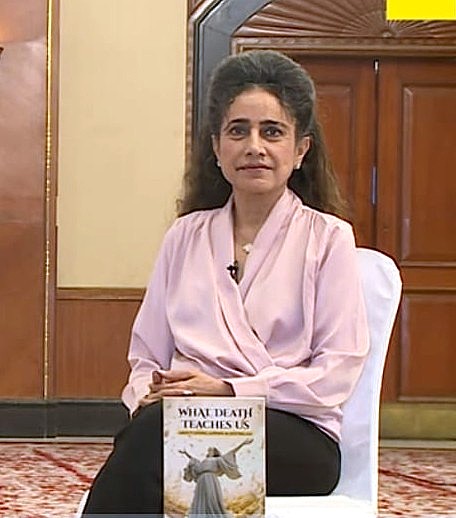
Founded by Suzy Singh, an international author, mental health therapist, clinical hypnotherapist, relationship counsellor, and grief expert, The Grief Circle brings together professional guidance and lived understanding. Suzy’s own experience of loss, including losing her father during the pandemic, shaped her belief that grief requires safe, compassionate spaces – especially when isolation magnifies pain.
Each circle uses a thoughtful blend of tools and techniques. The facilitation includes gentle mini-workshops within every meeting, designed sensitively to address the varied needs of different kinds of grief and grievers – recognising that no single approach fits all.
Since the pandemic, Suzy and her team of trained grief doulas have conducted nine Grief Circles, supporting participants across the globe. Individuals join from Australia, the USA, the Middle East, the UK, Europe, Singapore, and beyond – creating a deeply connected, cross-cultural community bound by shared understanding rather than geography.
When Stories Reveal the Layers of Grief
The stories that emerge within The Grief Circle reflect a powerful truth – grief is rarely just about loss. Beneath it often lie layers of fear, unresolved relationships, identity shifts, and long-held emotional wounds.
Mamta lost her husband to COVID, leaving her alone to navigate both her grief and his fledgling business – an Ayurvedic wellness centre. Overwhelmed and uncertain, she found support within the circle – not solutions, but steady presence. Through shared conversations and guidance, Mamta slowly found her footing. Today, she has revived the Ayurvedic wellness centre and has chosen to support others by becoming a grief doula herself.
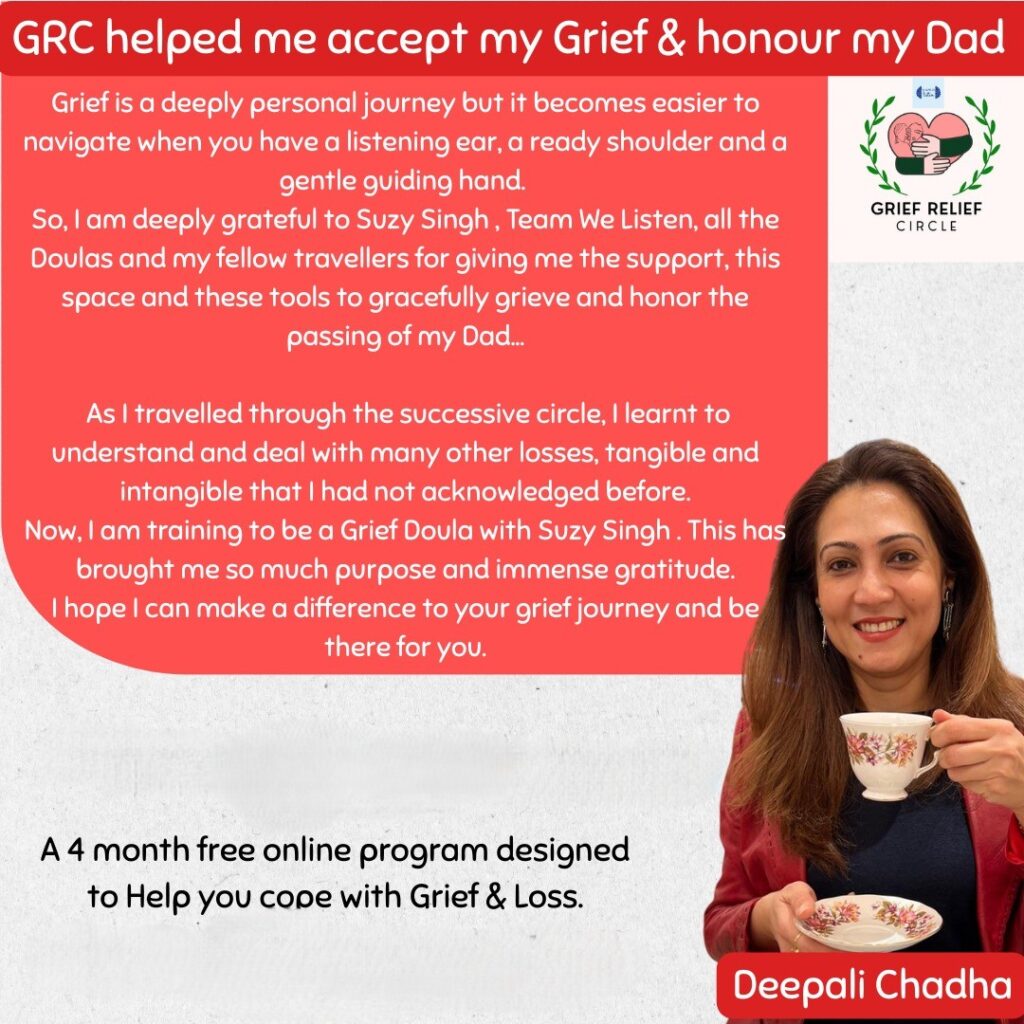
Richa, who lost her mother, found the Grief Circle to be a rare safe haven. As she processed her grief, she also began to understand the complex relationship between her parents – something she had carried silently for years. Through this deeper awareness, she found peace and clarity, and now plans to create a platform focused on women’s empowerment.
Simran entered the circle devastated after losing her husband to a rare disease. In the early days, her grief was accompanied by a desire to give up. Over time, held by empathy and support, her grief journey shifted. Today, she walks forward with quiet strength, committed to helping her son realise his dreams.
These stories remind us that grief is layered. What appears as pain from loss often holds beneath it years of unmet needs, fractured bonds, and unspoken emotions.
What The Grief Circle Offers
The Grief Circle holds space for all of this – without hierarchy, judgment, or expectation.
It offers:
• Guidance from grief experts and trained doulas
• Voluntary participation, allowing individuals to engage at their own pace
• Fortnightly online meetings that provide continuity and emotional grounding
• Practical grief-coping tools shared with care
• A global yet intimate community where experiences are validated
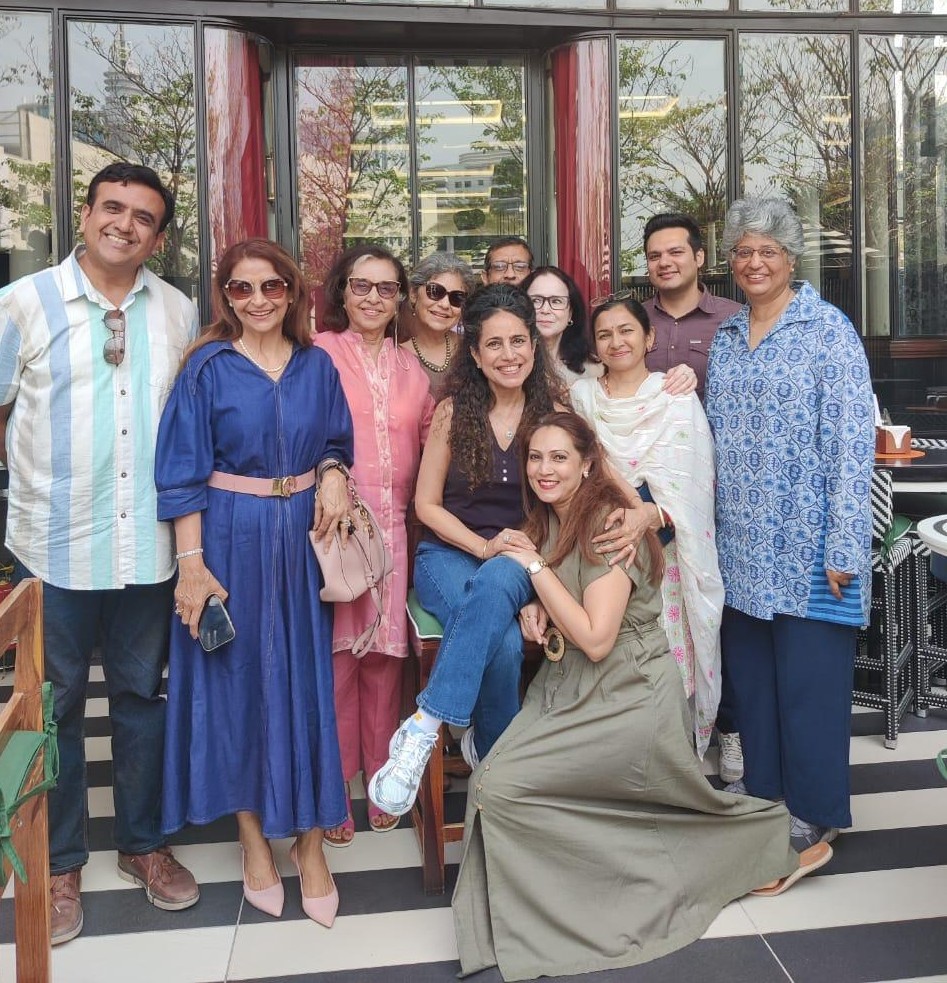
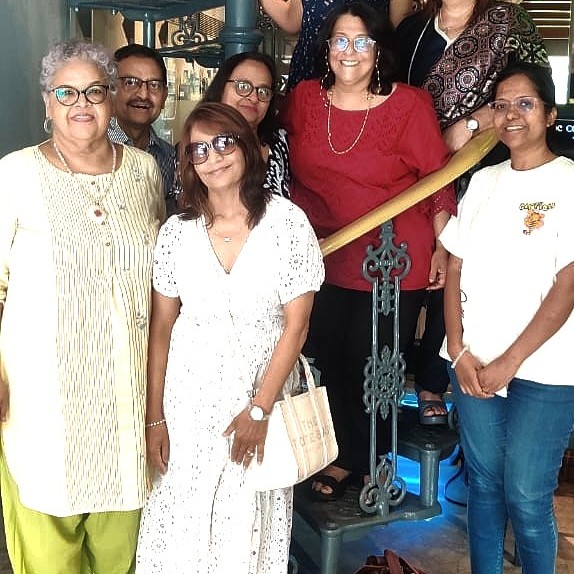
• Periodic in-person metro meetups, encouraging safe social re-engagement and reconnection
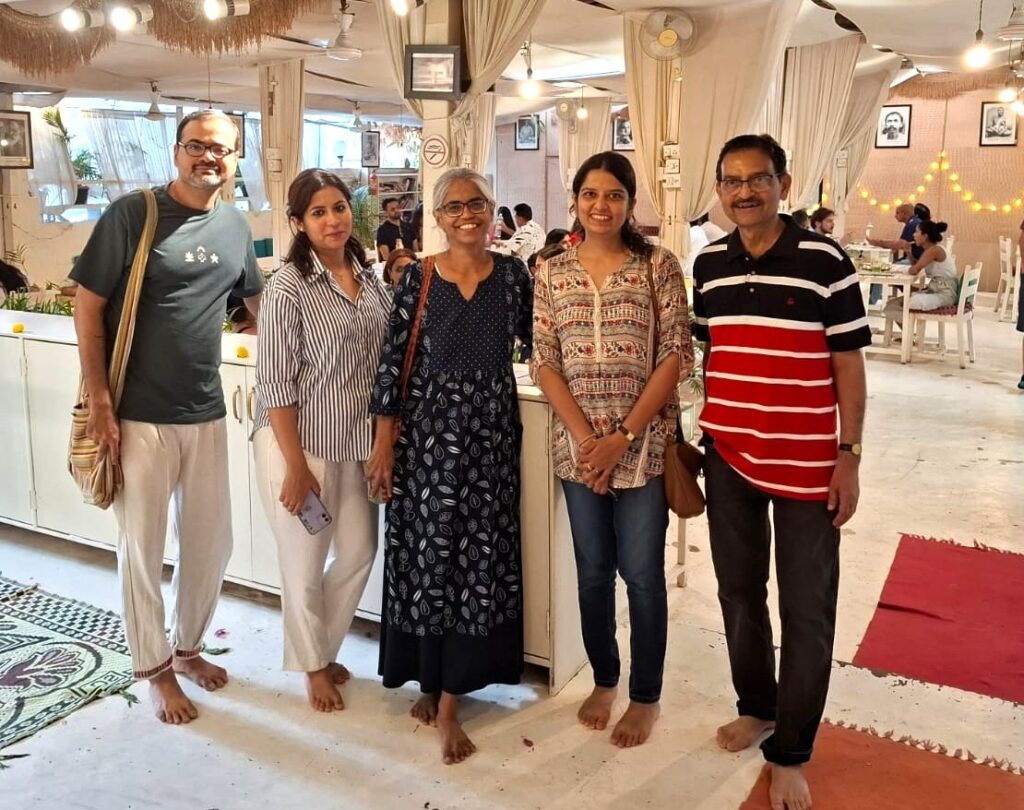
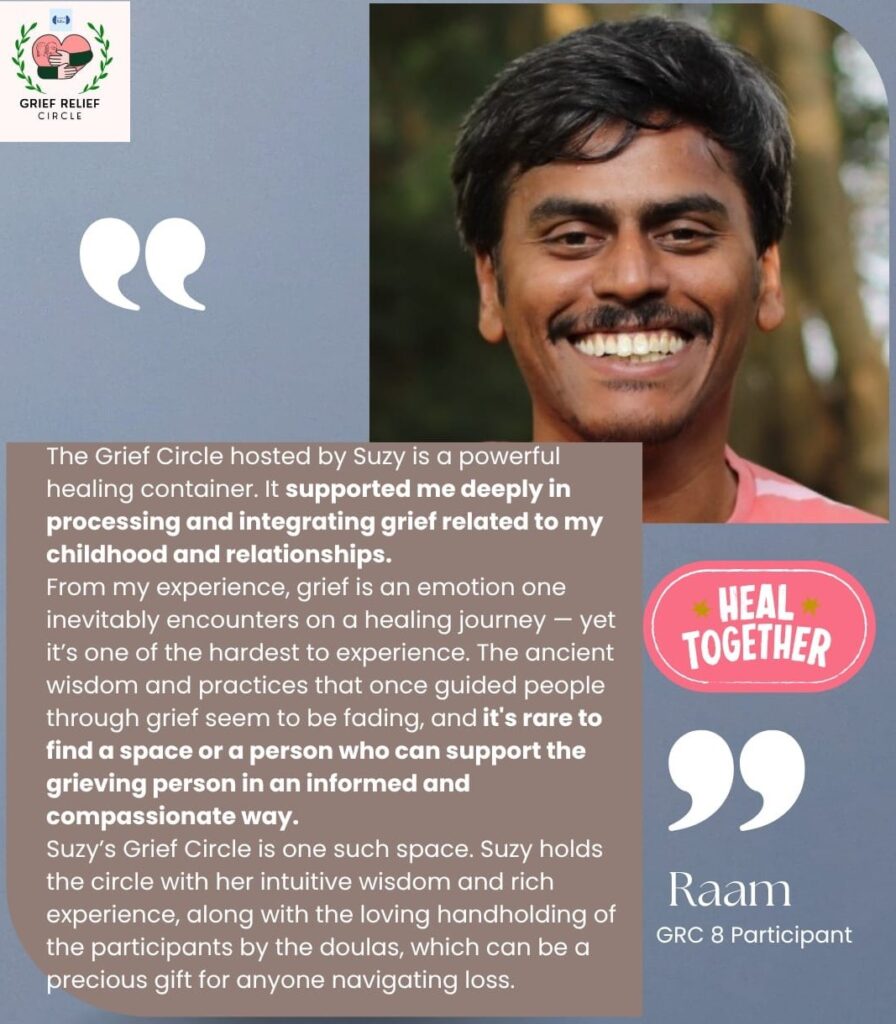
Here, interaction is rooted in empathy rather than sympathy. Listening matters more than advice. Presence matters more than fixing. This philosophy sits at the heart of meaningful grief support.
Because Grief Is Not Meant to Be Carried Alone
Grief reshapes us. It challenges what we know about love, identity, and connection. While it never fully leaves, it can be carried with greater care when supported by understanding and community. With the right grief support, individuals are reminded that they do not have to navigate loss in isolation.
At The Grief Circle, you don’t need to explain your pain.
You don’t need to justify your pace.
You don’t need to pretend you are coping.
You are invited to arrive as you are – and to know that your grief has a place here.
If this resonates, please share it with anyone who may be navigating loss. Registrations for Grief Circle 10, scheduled for February 2026, are now underway. The circle is offered as a free service, rooted in care and community.
For more information click here or write to suzyhealsme@gmail.com